
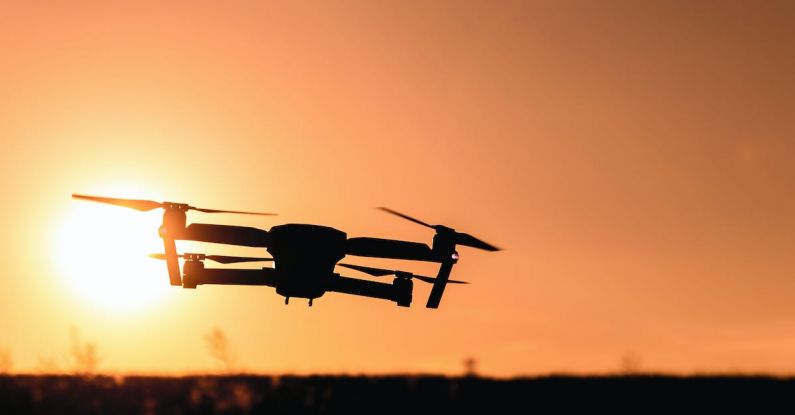
What Are the Latest Advances in Drone Technology?
Drones have become an increasingly popular technology in recent years, with advancements pushing the boundaries of what these unmanned aerial vehicles can accomplish. From recreational use to professional applications in various industries, drones have proven to be versatile tools with limitless potential. In this article, we will explore some of the latest advances in drone technology that are shaping the future of this exciting field.
**Extended Flight Times**
One of the significant limitations of early drone models was their limited battery life, which restricted the amount of time they could spend in the air. However, recent advancements in battery technology have significantly extended the flight times of drones. Lithium-ion batteries, in particular, have improved the endurance of drones, allowing them to stay airborne for extended periods. This development is crucial for applications such as aerial photography, surveillance, and search and rescue missions, where longer flight times are essential.
**Improved Camera Technology**
A key feature of many drones is their ability to capture high-quality aerial footage and images. Recent advances in camera technology have enhanced the capabilities of drone cameras, enabling them to capture stunning visuals with greater clarity and detail. High-resolution cameras with advanced stabilization systems now allow for smooth and professional-grade footage, making drones a valuable tool for filmmakers, photographers, and content creators.
**Autonomous Navigation**
Autonomous navigation is another area where drone technology has made significant strides in recent years. Drones equipped with advanced sensors, GPS systems, and artificial intelligence can now navigate complex environments autonomously. These drones can follow pre-programmed flight paths, avoid obstacles, and even perform intricate maneuvers without human intervention. Autonomous navigation capabilities have opened up new possibilities for drone applications in industries such as agriculture, construction, and delivery services.
**Collision Avoidance Systems**
To enhance safety and prevent accidents, many modern drones are equipped with collision avoidance systems. These systems use a combination of sensors, cameras, and software algorithms to detect obstacles in the drone’s path and automatically adjust its course to avoid collisions. This feature is particularly crucial for drones used in crowded or dynamic environments, where the risk of accidents is higher. Collision avoidance systems not only protect the drone itself but also prevent potential damage to property and injury to people.
**Swarm Technology**
Swarm technology involves coordinating multiple drones to work together seamlessly towards a common goal. This innovative approach has the potential to revolutionize various industries by enabling drones to collaborate and perform tasks that would be challenging or impossible for a single drone to achieve. Swarm technology opens up possibilities for applications such as search and rescue missions, environmental monitoring, and even entertainment events. By working together in a coordinated manner, drone swarms can cover larger areas, share information, and accomplish tasks more efficiently.
**Artificial Intelligence Integration**
The integration of artificial intelligence (AI) into drone technology has unlocked a host of new capabilities and functionalities. AI algorithms enable drones to process vast amounts of data in real-time, make decisions autonomously, and adapt to changing conditions on the fly. AI-powered drones can analyze images, identify objects, and even learn from their experiences to improve performance over time. This integration of AI has paved the way for more intelligent and versatile drones that can be applied in a wide range of scenarios.
**The Future of Drone Technology**
As drone technology continues to advance at a rapid pace, the possibilities for its future applications are virtually limitless. From delivering goods to remote locations and monitoring environmental changes to assisting in disaster response efforts and enhancing entertainment experiences, drones are poised to play a significant role in shaping the world we live in. With ongoing research and development pushing the boundaries of what drones can achieve, we can expect to see even more exciting innovations in the years to come.
In conclusion, the latest advances in drone technology have transformed these unmanned aerial vehicles into powerful tools with diverse applications across various industries. From extended flight times and improved camera technology to autonomous navigation and swarm capabilities, drones are becoming increasingly sophisticated and versatile. With the integration of artificial intelligence and ongoing technological advancements, the future of drone technology looks promising, with endless possibilities waiting to be explored and realized.


